Showing posts with label Aeronautics. Show all posts

21 November 2016

DARPA AND THE XS-1 PROJECT


 According to the DARPA presentation, the XS-1 project carries four prioritized goals: the design of a reusable booster system with launch costs traceable to <$5M/flight; to fly the booster 10 times in 10 days; to demonstrate an immediate payload to orbit capability with cost traceability to the Operational System; and to enable routine, low-cost space access.

Each of these four prioritized goals carries a test objective and a test threshold.

For a reusable booster with a cost per flight of less than $5 million USD, DARPA has set a test objective that XS-1 be able to transport equal to or greater than 3,000 lbs to a 100 nmi reference orbit inclined 90 degrees.

The threshold of this objective currently stands at an identical payload capacity to a 100 nmi reference orbit inclined 28.5 degrees.

For the flight rate goal, DARPA’s stated test objective is to achieve 10 flights in 10 consecutive days – even when weather, range, and emergency delays are accounted for (threshold).

For an immediate demonstration of a payload to orbit capability, the objective is to be able to carry equal to or greater than 1,500 lbs to a 100 nmi orbit inclined 28.5 degrees due east, with a threshold payload of equal to or greater than 900 lbs to the same target orbit parameters.

To enable this routine access to space, DARPA hopes to “fly the XS-1 to Mach 10+ at least once, and stage at high Mach to minimize the size and cost of the upper stage, “ with a stated developmental threshold for this at Mach 3+ travelling speeds and Mach 2+ staging speeds.

While DARPA’s name for this project implies a plane or Space Shuttle-like design, the Agency is actually open to several design options for the commercial field, 
 

with the presentation containing different notional designs for the XS-1 from Boeing, Masten, and Northrop Grumman – among others.

Moreover, DARPA notes that the XS-1 could be a winged or unwinged vehicle. It could also be a payload carriage craft.
Given the broad range of potential designs, XS-1 could be a horizontal launch/horizontal land vehicle, a vertical launch/horizontal land vehicle, or a vertical launch/vertical land vehicle.

It could launch from the ground, air, or sea barge and could either land downrange or return to land at its launch site.

Taken from an article of NASA's Chris Gebhardt

26 February 2014

THE NEW AERIAL FAUNA


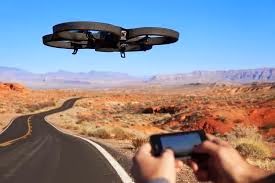
Called with that name that even it’s difficult to pronounce, starting some years ago, the “quadcopters” are very versatile crafts, capable to fly hundreds of yards high, make unlikely maneuvers and surprise the most distracted person.


Imagine what they could lead to think if they are seeing at night, with colored LEDs turned on.


That is why it is good that UAP investigators keep updated on this new aerial fauna, that surely is running in the skies of many countries.


Its every time more reduced size, make them easily to transport. Their low cost make of them terrific observation or entertainment instruments.


And here is the updated list:


DJI Innovations released its PHANTOM 2  Vision quadcopter, the camera-equipped successor to its popular PHANTOM model.


The HUBSAN company released its X4 H107D FPV, which has a camera that transmits a real/time viodeo signal tothe user.


ProtoX from the ESTES company may not have all the features other craft are equipped with, but the ProtoX does hold the distinction of being the smallest quadcopter.

AirDROIDS created the PocketDrone. It squeaks in under 500 dollars mark and is made to carry a GoPro --best camera in the world-- but also folds down for easy transport. What is more, its battery runtime is about twice that of the Phantom.


Finally, the camera on the AR.Drone 2.0 displays video at a 1280x720 resolution on your smartphone or tablet while you fly it.


Article prepared with material taken from Gizmag and the Internet.


22 December 2013

U.A.P.S.G. BRIEFS


Air Mule


Air-Mule is a robotic aircraft –obviously unmanned—equipped with self control that also could be controlled at distance, made by Israel.


This Air-Mule can perform 180 degrees angles, it is a Vertical Take-off and Landing, can fly diagonally, weighs 1,700 lb,(which indicates that possible synthetic material has been used instead of metal), can carry a payload of 1,400 lb., flies slowly at 112 mph and can operate at a ceiling of 12,000 ft.


Supposedly it would help to rescue soldiers from a risky zone, and it can land and take-off within an area of 430.5 sq.ft.


With rotors integrated to the body and the matte-black color this Air-Mule has a lot of stealthy.


It has already being tested and there are plans for “full mission demonstrations” next year.


Sky-Jack (drone’s hijacker)


Sky-Jack works using a Parrot AR.Drone 2.0 with a Raspberry Pi, a USB battery, and two wireless adapters, a software developed by Linux, and is operated by the well known hacker Samy Kamkar, now working legally.
 

Once activated, one of the wireless adapters will detect any nearby wireless connections in range and identify the ones associated with other UAVs. It then automatically disconnects these drones from their owners


Meanwhile, the other adapter creates a wireless network of its own and connects to the disabled drones as if it were their original owners.


A war between drones, all in the cyber world.

Source: GIZMAG 
Adaptation: Milton W. Hourcade 

07 December 2013

The companies compete: Lockheed-Martin announced its SR-72; NOW NORTHROP GRUMMAN ANNOUNCES ITS RQ-180


While the SR-72, a kind of descendant from the SR-71 “Blackbird” is a hypersonic UCAV, (see the article published in this blog on November 6) and it is said would be operative for 2020 –although the official announcement gives room to speculate about how many experimental flights have already been done— the RQ-180 is a stealthy reconnaissance UAV that can stay flying for weeks, and is a descendant of the Northrop Grumman X-47B, used by the US Navy.


The RQ-180 announcement was published in the latest edition of Aviation Weekly.


The RQ-180 is a drone that operates at high altitude, at sub-sonic speeds.


It is believed that there is a small fleet of this aircraft already flying over the world, and their base is at the famous Area 51.
 

The X-47B was an experimental drone, smaller than the RQ-180, and the first to takeoff and land from an aircraft carrier.

06 November 2013

LOCKHEED MARTIN INTRODUCES THE SR-72


In 1976, U.S. Air Force SR-71 Blackbird crews flew from New York to London in less than two hours, reaching speeds exceeding Mach 3 and setting world records that have held up for nearly four decades.

But those world records may not stay unbroken for long.

That’s because today, at the birthplace of the Blackbird – Lockheed Martin’s Skunk Works®  – engineers are developing a hypersonic aircraft that will go twice the speed of the SR-71. It’s called the SR-72. 

The SR-71 was developed using 20th century technology. It was envisioned with slide rules and paper. It wasn’t managed by millions of lines of software code. And it wasn’t powered by computer chips.  All that changes with the SR-72.
 
Envisioned as an unmanned aircraft, the SR-72 would fly at speeds up to Mach 6, or six times the speed of sound. At this speed, the aircraft would be so fast, an adversary would have no time to react or hide.


A hypersonic plane does not have to be an expensive, distant possibility.  In fact, an SR-72 could be operational by 2030. For the past several years, Lockheed Martin Skunk Works® has been working with Aerojet Rocketdine to develop a method to integrate an off-the-shelf turbine with a supersonic combustion ramjet air breathing jet engine to power the aircraft from standstill to Mach 6. 


SR-72 is not the first hypersonic Skunk Works® aircraft. In partnership with the Defense Advanced Research Projects Agency, engineers developed the rocket-launched Falcon Hypersonic Technology Vehicle 2 (HTV-2) .The HTV-2 research and development project was designed to collect data on three technical challenges of hypersonic flight: aerodynamics; aerothermal effects; and guidance, navigation and control.

The SR-72’s design incorporates lessons learned from the HTV-2, which flew to a top speed of Mach 20, or 13,000 mph, with a surface temperature of 3500°F.
(Text abridged from Lockheed Martin's web page.  Search of images by Milton W. Hourcade)